
Missouri is laying the groundwork for a significant expansion of nuclear power at the same time a new U.S.-South Korea agreement could bring eight large nuclear reactors to federal sites across the country.
The Missouri Department of Natural Resources released its new State Energy Plan on September 30, outlining how the state could meet rapidly growing electricity demand while improving reliability and encouraging more power generation within Missouri. The plan identifies four major priorities: energy independence, nuclear enablement, economic growth and grid reliability.
According to DNR, Missouri has shifted during the past decade from being a net exporter of electricity to a net importer. The state also imports virtually all of the fuel used by Missouri power plants. State officials say increasing in-state generation could keep more energy investment within Missouri while supporting new jobs and industrial development.
Nuclear power plays a central role in the new strategy.
The plan recommends pursuing policies that could lower the financial risk and upfront cost of new nuclear generation. Among the proposals are allowing the Environmental Improvement and Energy Resources Authority to provide financial assistance for nuclear projects, studying the creation of a Missouri Nuclear Power Authority, modifying the state’s Renewable Energy Standard into an Advanced Energy Standard and establishing certain ratepayer protections for advanced nuclear projects.
Missouri’s Advanced Nuclear Energy Task Force, created by Governor Mike Kehoe through Executive Order 26-04, is expected to help implement the nuclear-related recommendations. State officials say expanding nuclear generation could provide reliable power while supporting economic development and Missouri’s growing electricity needs.
Those needs could increase substantially in the years ahead. DNR says data center development is expected to be the primary driver of future electricity-demand growth in Missouri, although the size of that increase remains uncertain.
Missouri’s nuclear discussion is also taking place as the United States prepares for a potentially massive new investment in nuclear power.
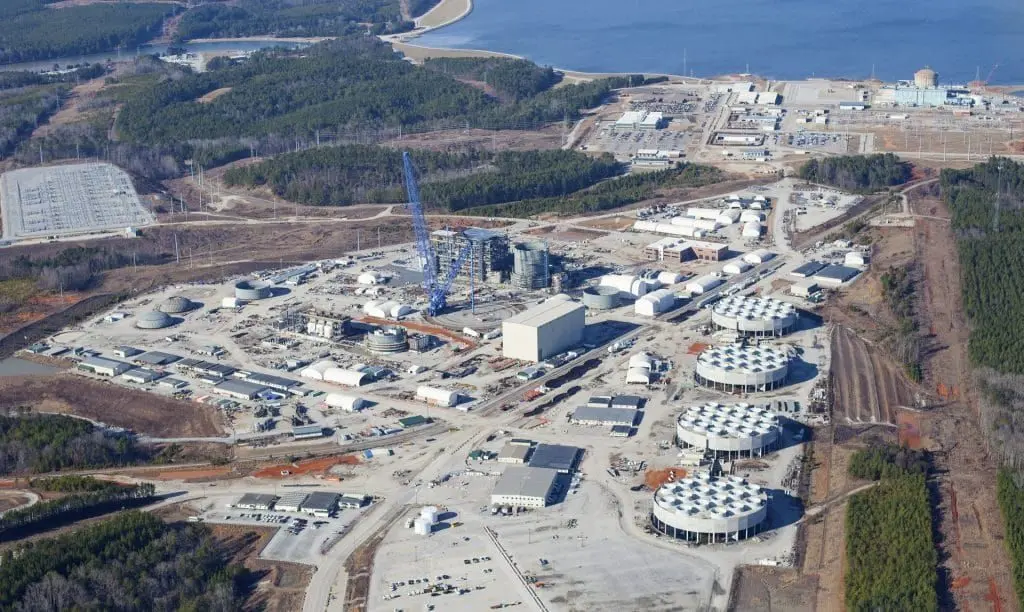
On October 1, Westinghouse announced details of a strategic framework between the U.S. government and South Korea that calls for up to $120 billion in Korean investment to help finance eight new large-scale nuclear reactors in the United States. The framework includes six Westinghouse AP1000 reactors at three two-unit plants and two South Korean APR1400 reactors. The reactors are contemplated for federal sites designated by the U.S. government.
The agreement does not currently identify Missouri as a location for any of the eight reactors, and specific sites still must be selected and projects would face additional planning, regulatory and financing steps. However, the timing could be significant for Missouri as state leaders actively pursue policies designed to make new nuclear development possible.
Missouri already has one commercial nuclear power plant, Ameren Missouri’s Callaway Energy Center. DNR also says Ameren has announced plans to add approximately 1,500 megawatts of new nuclear generation by 2040 and expects to seek an extension of Callaway’s operating license beyond 2044.
The new State Energy Plan does not select a location or reactor design for Missouri’s next nuclear facility. Instead, it establishes a policy framework intended to make future nuclear projects easier to finance and develop while maintaining a diversified mix of energy resources.
With Missouri preparing for greater electricity demand, potential data center growth and the retirement of older generating facilities, the state’s energy debate is increasingly shifting from whether additional generation will be needed to what will be built, where it will be located and how it will be financed.